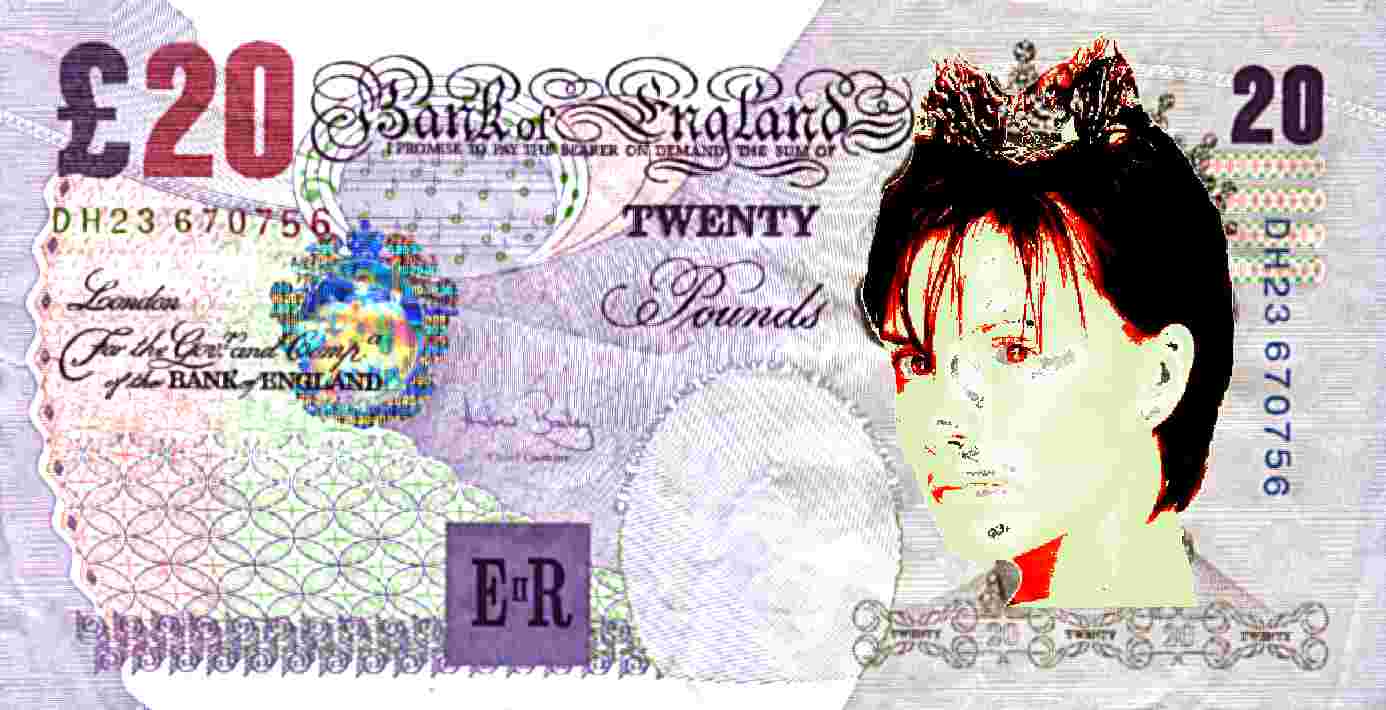
Money does not exist. People, skills and all the things on earth are here with or without it. What is it then ? It's paper and metal as cash. It's numbers assigned to your identity as a bank account. It's what ever you believe it is. It is what those around you believe it is.
My daughter borrows a tenner (£10) she says she will pay back. She doesn't pay me me back. I ration her meals, demand she serve me, and confine her to her room until the debt is settled - nah, I just let it go. She's all grown up now nursing the elderly.
I am hungry when I finish work. I go to the shop where I expect to give money and get enough food..
Money is not good or bad in its self. At best it enables me to freely enjoy the sophisticated product of my society. It was once believed that work in any capacity in UK society would be rewarded with great things - welfare, peace, transport, education, beauty, safety, housing, art, invention.
For the past thirty years some people have acquired enormous amounts of money not from work but by sitting on a pile of bricks ( a building, a house ), and very often renting the bricks to somebody who does work. Many of these houses were built and paid for by the collective british tax payer in the 1950's 60's, many others were built and paid for decades and centuries before that.
Starting in the 1980's public housing was sold back to us with borrowed money, where council tenants had a right to buy houses that belonged to all of us so they could then sell them back to us. A con trick that the the british prolotariate swollowed in greed, ignorance and pride to the ultimate benefit of the city, its merchants and dealers.
Margaret Thatcher and her government with the destruction of nationalised services layed way for a corperate city mafia to design a society in their service. With the properganda genrated by murdoch media the mafia were able to groom the public with fear, legality, desire, "choice" etc.
There was a time when most of us were employed with the production of necessities like food. In the 50's and 60's food costs represented the greatest part of our spending, where as now it is housing ( mortgages / rent ).
10 facts: The super rich
Most peoples'
earnings have been rising under Labour, but the top one per cent are doing
spectacularly better than everyone else. Whether they're pop stars and footballers,
or lawyers and City bankers - a few winners are taking an ever larger slice
of our national income

